
Why kitchen exhaust areas get greasy even after wiping
Kitchen Exhaust Grease: Why It Returns After Cleaning Fast
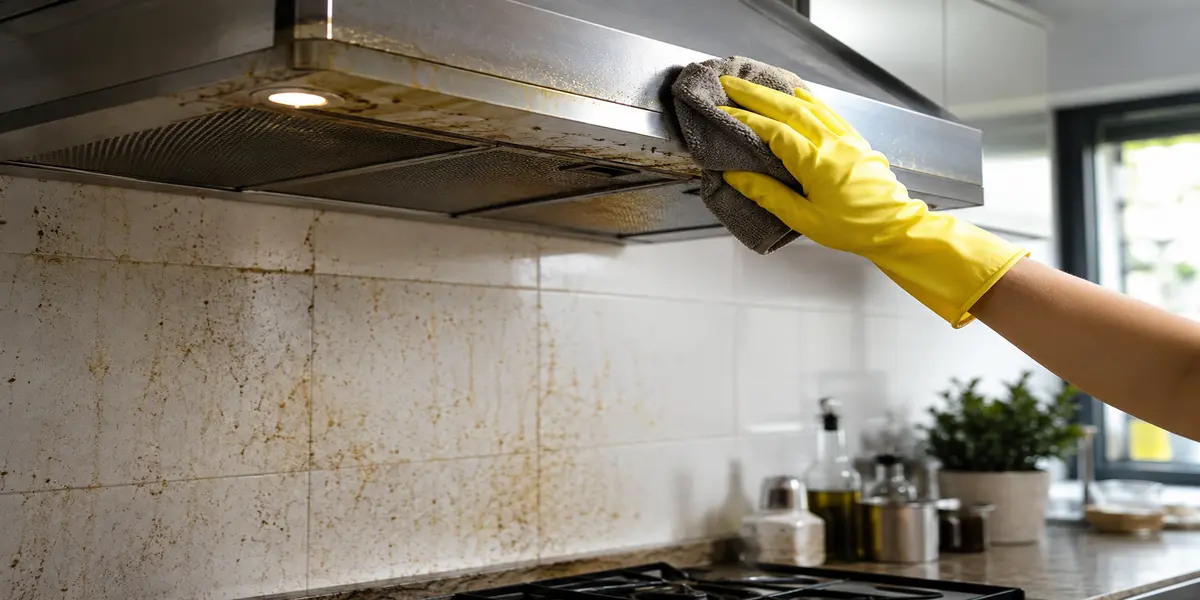
Have you ever spent an entire afternoon scrubbing your kitchen counters and still had a layer of grime on your stove hood? You clean it with a damp cloth but the sticky film comes back in a day or two. It’s so frustrating many homeowners in Australia have been battling this irritating issue during their weekly home-cleaning regime. The issue is rarely your effort rather it comes down to how vapourized cooking fats move through your home’s ventilation system.
In this blog we will discuss why grease accumulates so quickly around cooking zones, how airborne oils behave and why professional kitchen exhaust cleaning is necessary to keep your home fresh, hygienic and completely safe from potential fire hazards.
The Physics of Airborne Cooking Oils
On cooking of sausages or searing of steaks, liquid fat turns into little vaporization droplets in the air. The resulting hot vapors rapidly rise up with water vapour and hot air from the cooking surface. When the air becomes cooler it results in oil fumes condensing into viscous liquid particles on any cold neighbouring surfaces. Removing the oil residue just by wiping the surface only gets rid of the fresh layer. Through each time you heat up and use your stove burners this stubborn film is going to be building up more and without regular, intensive cleaning it will just continue to accumulate on your stovetops.
Saturated Mesh and Baffle Filters
Your range hood uses metal mesh or baffle filters to separate oil droplets from the air before they get into the internal ducting. These thin metal ducts are glazed with solidifying grease layers after weeks of daily cooking. Once the filter mesh is blocked entirely, it is unable to capture anymore the airborne oil which is entering. Keeping filters clean is one of the most effective ways to minimise grease buildup, according to relocation cleaning experts, and improve kitchen ventilation. Far from filtering and collecting the rising vapor, a clogged filter causes the great air to bounce back on the metal holder. The extra oil deposits on nearby cabinets, backsplashes and ceiling tiles. Routine range hood maintenance in cleaning the filter screens will help prevent them from becoming clogged and allow them to continue capturing airborne oil efficiently.
Poor Ventilation Airflow and Suction
Poor ventilation fan performance or size leads to sticky film on all kitchen surfaces around the fan. If the power of your fan motor is not strong enough, the hot vapours of oil stay longer in the room they are not immediately taken out. The air they left behind helped grease coat the tops of high cabinets and adjacent walls. Also the use of incorrect duct sizes and the use of flexible ducts with sharp bends seriously restricts the overall airflow. When the air is starved for a smooth exit from your home, oily vapour is trapped and recirculated back into the room. The higher capacity fan with a clean ducting path will improve the efficiency of suction and keep your surrounding area cleaner for longer.
| Feature | Shallow Surface Wiping | Deep System Degreasing |
| Target Area | External Canopy exterior | Filters,fans and internal ducts |
| Grease Removal | Remove light surface dust | Dissolves hardened oil deposits |
| Fire Risk Impact | Minimal safety improvement | Significantly reduces fire hazards |
| Airflow Effect | No change to suction power | Restores maximum extraction rates |
| Frequency | Daily or weekly maintenance | Every 3 to 6 months |
Hidden Oil Build-Up in Internal Ducts
If your range’s exterior stainless steel surfaces appear sparkling clean after you simply wipe them, the condition of internal ductwork is usually much different. In reality your cleaning filters take care of most oil vapours, a certain portion of it still reaches your internal vent pipes where you can see it as a layer of viscous flammable residue. The continuous flow of grease is also the reason why a freshly cleansed edge of the hood appears oily and sticky a few hours after being washed. Full kitchen exhaust cleaning concentrates on these hidden internal areas to halt oil from running back down onto your stovetop.
Ineffective Household Cleaning Agents

Employing ordinary all-purpose surface sprays or dish soaps in the mild end of the spectrum usually makes the sticky grease worse. Household cleaners are intended for light soil and spills that are water soluble, not heavy, polymerized lipids. When sprayed on thick layers of oil these mild products just spread the grease out, resulting in a large, blurry film on the surface of the stainless steel. To shatter stubborn oil bonds efficiently, you have either to use alkaline based degreasers or natural chemical reactions with warm water, baking soda and dishwashing liquid. Breaking down the chemical make-up of animal fats and vegetable oils properly ensures that grease is lifted out rather than being spread onto neighboring surfaces.
Fire Hazards of Accumulated Fat Residue
Built-up oil in vent systems is not just a nuisance to clean, it is a serious home fire risk. Cooking oils are combustible and when confined in a tight space such as an exhaust duct they can ignite if a flare-up in this space kitchen bottom happens on the cooktop below. Fire authorities around the country are saying that kitchen grease fires are travelling quickly through sooty ducts. Routine monitoring and hood cleaning help to prevent hazardous fuels from accumulating immediately above hot cooking surfaces. Having a clean and grease free canopy, filters and fans will keep your kitchen safe for your whole family.
| Cleaning Method | Recommended Frequency | Estimated Cost | Key Benefits |
| Filter Soaking (DIY) | Every 2 to 4 weeks | $5-$15 | Restores filter suction,stops drips |
| Canopy Degreasing(DIY) | Weekly | $10-$20 | Maintains visual appearance,removes odours |
| Professional System Clean | Every 6 to 12 months | $150-$350 | Cleans internal ducts,ensures fire safety |
Practical Steps for Long-Lasting Cleanliness
Keeping your kitchen grease-free needs regular maintenance and some good cooking habits. These few tips will help prevent the greasy mess and keep your hood happy and effective:
- Aim to start the exhaust fan two minutes before cooking to get that fresh air flowing.
- For five minutes straight, continue running the fan to clear away any residual vapours.
- For deep cleaning of metal mesh filters, soak them in a water+baking soda solution every month to get rid of any stuck-on oils.
- Clean the outer canopy with a quality microfiber towel and a dedicated alkaline degreaser.
- Professional internal duct cleaning annually is recommended to prevent the accumulation of heavy soled , hidden lumps of fat within the system.
Reclaim Your Fresh Kitchen Today
Managing stickiness on the surfaces around your stove can seem like a losing battle but knowing how cooking vapours move makes all the difference. Wiping down the outer panels is really more than fine for daily upkeep, just it isn’t going to fix the root problem of the grease build up that is nestled deep inside your ventilation system. Choosing a good degreaser product is also important and if you make time for regular professional kitchen exhaust cleanings you will end up with a fresher home and appliances that perform well without worries. Take care of your kitchen now to enjoy benefits like clean kitchen appliances working smoothly and a worry-free cooking experience. Keeping your kitchen ventilation system in top condition also helps maintain a cleaner home environment, much like the standards highlighted in what real estate agents actually check during final inspection.
Related Posts
Simple Ways to Eliminate Damp Carpet Smell
Have you ever entered a room and immediately we smelled that damp musty odor of…

The Ultimate Guide to Dust-Mite Proofing Your Home
Did you ever wake up with a sore head and scratching eyes, and no idea…

The Ultimate Bathroom Cleaning Checklist for Every Home
Cleaning Checklist for Bathroom: Complete Home Guide Have you ever entered your bathroom and got…